Pediatric Eye Care
Small eyes deserve
unhurried attention
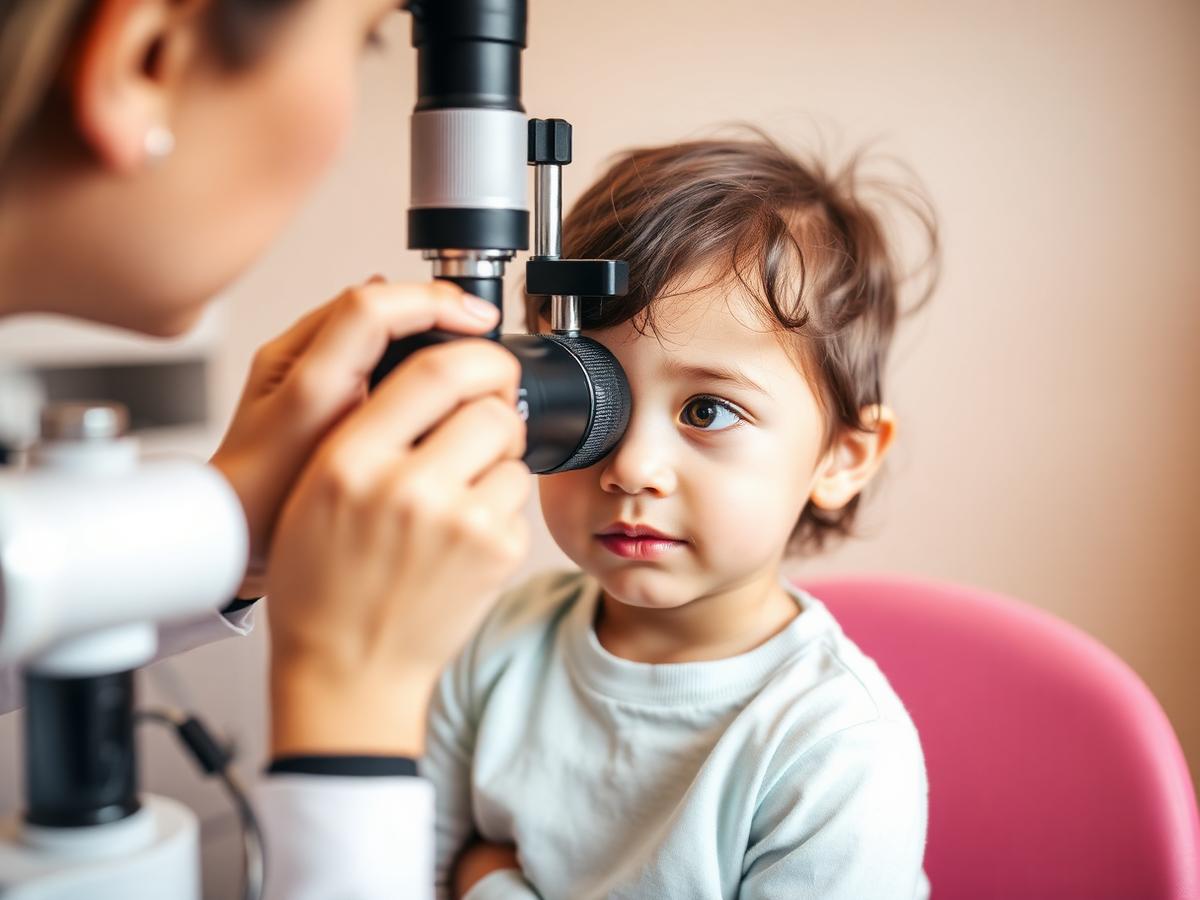
Children rarely tell us they cannot see — they simply adapt. Our pediatric examinations are gentle, play-based and thorough, designed to find what a screening test cannot.
1 in 5
school-aged children have an undetected vision problem
80%
of classroom learning is visual
6 mths
the age a first eye assessment can safely begin
18+ yrs
of clinical experience behind every assessment
Why children’s vision matters
Vision is learned, not simply born
A child’s visual system develops rapidly through the first decade of life. Clear, coordinated input from both eyes is what teaches the brain to see in three dimensions, judge distance, and hold focus long enough to read a page.
When one eye is blurred, misaligned or working harder than the other, the brain quietly adapts — and that adaptation can become permanent. Because children have no reference for normal vision, they seldom complain. Difficulty is more often read as behaviour: inattention, reluctance to read, clumsiness in sport.
This is why we assess early and repeatedly. Detecting a problem at four rather than eight can be the difference between a fully correctable condition and a lifelong reduction in vision.
Common conditions
What we look for
Each of these is common, treatable, and frequently missed by vision screenings.
Myopia (short-sightedness)
Distance blur that typically begins between 6 and 13 years and progresses with growth. Managed actively, not simply corrected.
Amblyopia (lazy eye)
Reduced vision in one eye because the brain has learned to ignore it. Most treatable when detected early in childhood.
Strabismus (eye turn)
Misalignment of the eyes, constant or intermittent. Assessed with orthoptic testing and managed with lenses, exercises or referral.
Hyperopia (long-sightedness)
Often missed because distance vision looks fine, yet it causes reading fatigue, headaches and avoidance of close work.
Astigmatism
An irregular corneal curve that blurs vision at all distances and can slow reading development if uncorrected.
Binocular vision issues
Difficulty coordinating the two eyes — a common and treatable cause of losing place while reading.
Signs to watch for
What parents notice first
Sitting very close
Sitting close to screens, holding books unusually near, or squinting to see the board.
Rubbing and blinking
Frequent eye rubbing, excessive blinking or watering that is not related to tiredness.
Head tilt or turn
Consistently tilting or turning the head to look at something can signal an eye alignment problem.
Losing place reading
Skipping words or lines, using a finger to track, or reading well below their level.
Headaches and fatigue
Late-afternoon headaches, sore eyes after homework, or avoiding close work altogether.
One eye drifting
An eye that turns in or out, especially when tired, should always be assessed.
Myopia control
Slowing short-sightedness
Myopia is no longer simply corrected — it is managed. Higher myopia carries lifelong risk of retinal detachment, glaucoma and macular disease, so slowing progression protects future eye health.
Axial length tracking
We measure the physical growth of the eye, giving an objective view of progression beyond the prescription.
Specialty spectacle lenses
Modern myopia control lenses look like ordinary glasses while reducing the growth signal to the eye.
Orthokeratology
Overnight rigid lenses gently reshape the cornea, giving clear unaided daytime vision and proven control.
Low-dose atropine
A nightly drop, used alone or alongside optical treatment, with strong evidence for slowing progression.
Outdoor time
Two hours of daylight a day meaningfully reduces the risk of myopia developing and progressing.
Near-work habits
Practical guidance on working distance, breaks and screen use that families can actually maintain.
Early examinations
The benefits of testing early
Learning depends on vision
Up to 80% of classroom learning is visual. Correcting vision early removes an invisible barrier to reading and confidence.
Treatment windows close
Conditions such as amblyopia respond best while the visual system is still developing, which is why timing matters.
Objective myopia tracking
Axial length measurement lets us see progression before the prescription changes, so we can act sooner.
Confidence and comfort
Children who see clearly participate more — in class, in sport, and socially.
Recommended schedule
When children should be tested
6 – 12 months
First assessment of eye health, alignment and focusing — no letters required.
3 years
Pre-school check of vision, coordination and long-sightedness.
Before school
A full examination to ensure vision will not limit early learning.
Every 1 – 2 years
Ongoing reviews through primary and secondary school.
Annually with myopia
Children in a myopia control program are reviewed at least yearly, often sooner.
FAQs
Questions parents ask us
Book your child's eye examination.
Gentle, play-based testing with plenty of time for questions.